
Girls Flag Football Passes 100,000 High School Players
The National Federation of State High School Associations reported 102,360 girls flag football participants in 2025-26, a 48.7 percent jump in a single year. The sport is now offered at 3,990 high schools and was the primary driver of a fifth consecutive year of record national participation.
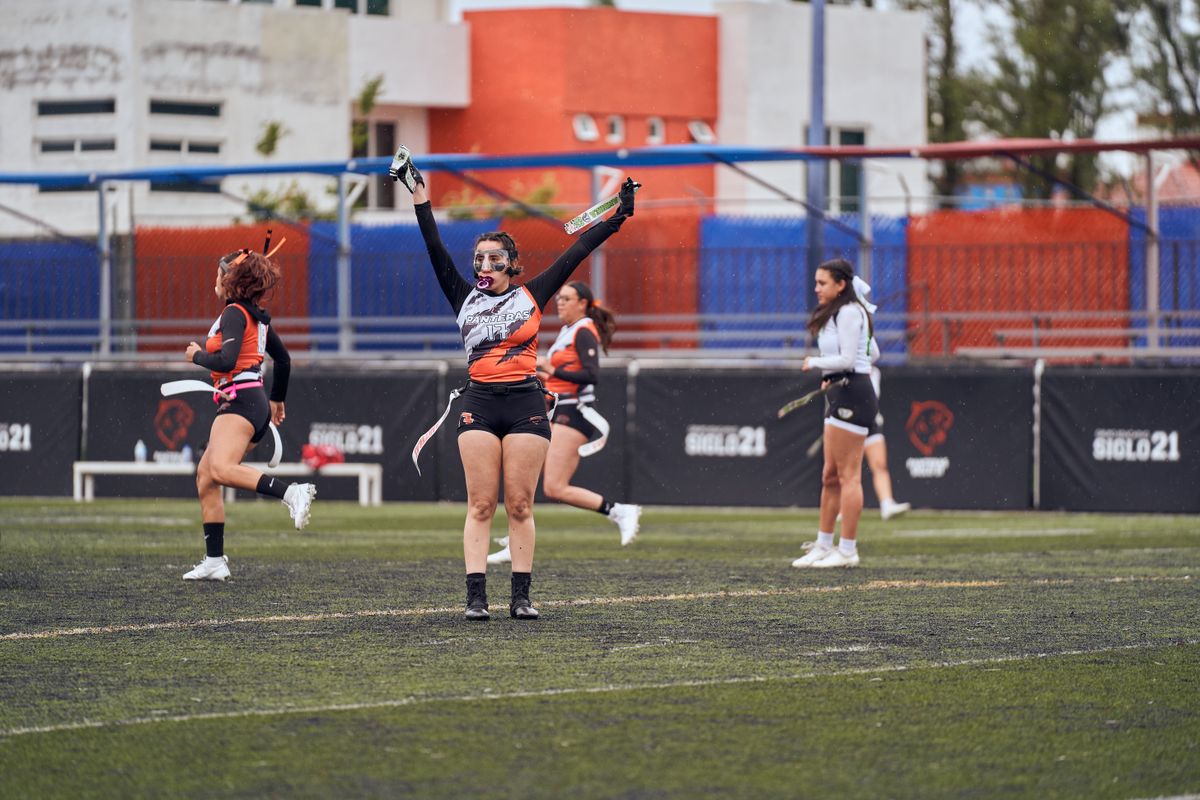
At a Glance
- Girls flag football participation reached 102,360 players in 2025-26, up from 68,847 the year before, a 48.7 percent increase.
- The number of high schools sponsoring the sport rose to 3,990 from 2,736, and 37 states are set to sanction or pilot it next year.
- Flag football and girls wrestling led total high school participation to 8,415,684, the fifth straight annual record, two years before the sport debuts at the Los Angeles Olympics.
Girls flag football crossed six figures. The National Federation of State High School Associations released its 2025-26 High School Athletics Participation Survey on August 31, and it counted 102,360 girls playing flag football, up from 68,847 the previous year. That is a 48.7 percent increase in twelve months, in a sport that recorded 15,716 participants as recently as 2021-22 and roughly 4,500 in 2005-06.
The school-level numbers moved almost as fast as the player numbers. Flag football is now sponsored by 3,990 high schools, up from 2,736, a 46 percent increase, and 37 states are expected to sanction or pilot the sport by next year. Adding roughly 1,250 programs in a single academic year is the kind of expansion normally associated with a sport being mandated rather than adopted school by school.
The National Picture
Flag football did not grow in isolation. Total high school sports participation reached 8,415,684, an increase of 149,440 and the fifth consecutive annual rise. Boys participation hit a record 4,761,095 and girls participation a record 3,654,589. Girls wrestling, the other headline sport of the survey, grew 19.9 percent to 88,771 participants across 8,853 schools. Davis Whitfield, the NFHS executive director, framed the overall result in institutional terms, saying that "education-based sports within our nation's schools is a privilege not available in most other countries."
What separates flag football from the rest of the growth story is the rate. A 48.7 percent single-year increase in a sport with more than 100,000 participants is unusual, because sports at that scale normally grow in low single digits. Flag football is still behaving like a startup at a size where most sports have long since flattened out.
What Comes After High School
The receiving end of that pipeline is being built at the same time. More than 400 college club and varsity teams are expected to compete across all governing bodies in 2026-27. The NAIA will crown its first national champion in spring 2027. The NJCAA is targeting 2028, and the NCAA, which added flag football to its Emerging Sports for Women program in January 2026, is projected to hold a first championship in spring 2028 if all three divisions approve the enabling legislation in January 2027.
That sequencing matters for the athletes counted in this survey. A sophomore playing in one of those 3,990 programs this fall graduates into a college landscape that, for the first time, is likely to include a national championship in her sport. For most of the past decade, high school flag football players had nowhere structured to go.
Two Years From Los Angeles
The survey lands just under two years before flag football debuts at the Los Angeles Olympics in 2028. The sport now has a domestic participation base of more than 100,000 high school girls, a college structure racing toward championship status, and a professional league in development with the NFL and TMRW Sports targeting a 2027 launch. The NFHS numbers are the clearest measure yet of whether the sport's institutional ambitions are matched by people actually playing, and for a second straight survey the answer is that participation is running ahead of the infrastructure built to hold it.